
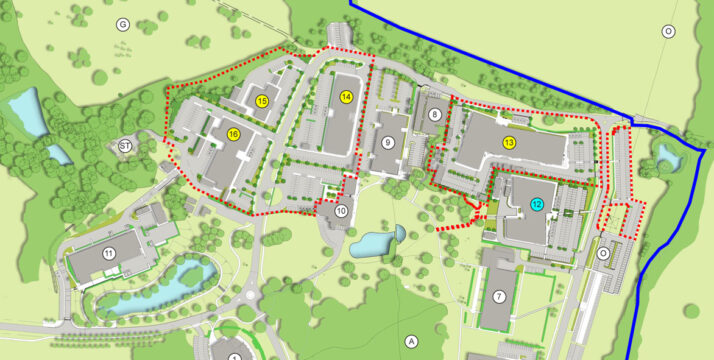
We were appointed by a developer client as the landscape architect for an infill research and office development within an existing research park. Our scope covered landscape architecture and landscape planning to support a hybrid planning application, including outline and detailed planning proposals.
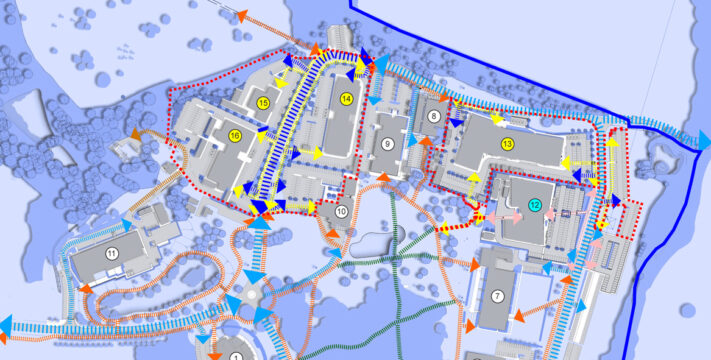
As part of our landscape architect services, we prepared strategic landscape layouts for each development plot. These layouts allowed the client to review and develop the proposals. They also demonstrated how the new buildings would integrate with the existing research park infrastructure. In addition, the landscape strategy considered the potential effects of the development on long-distance views. Two plots were developed to outline planning status, while one progressed as a detailed planning application.
The landscape architect team carefully considered the existing site conditions throughout the design process. The research park occupies the grounds of a former mansion, with a mature arboretum forming a central landscape feature. Furthermore, substantial belts of existing trees define the northern and eastern boundaries of the site.
These established trees provide an important landscape asset for the proposed development. Therefore, the landscape design retained and incorporated key tree groups wherever possible. The site also occupies a prominent hilltop location. As a result, the landscape architect considered both topography and existing vegetation when developing the strategic landscape proposals. This approach helped minimise the visual and landscape effects of the development.
The strategic landscape design addressed vehicular circulation, car parking and cycle parking. It also considered pedestrian movement, wayfinding and DDA accessibility requirements. In addition, the landscape architect considered development phasing and strategic infrastructure as integral components of the overall landscape planning strategy.
Given the parkland setting, screening of parking areas and service plant formed an important part of the landscape design. The planting strategy uses native species to strengthen biodiversity and provide wildlife habitat and foraging opportunities. Hawthorn hedging defines the plot boundaries and provides additional screening. Native tree planting also reinforces the existing landscape structure. Finally, ornamental and wildlife-friendly planting adds seasonal interest while supporting the ecological value of the research park landscape.
Landscape Institutes Work Stages: 2 to 3
Client: Aviva Investors
Architect: BCRi Architects
Developer/ Contractor: Churchmanor Estates Co. Plc.