
We were appointed by a developer client as the landscape architect for a proposed residential development off Worsley Bridge Road, Bromley. The 2.0-hectare site occupies a former sports ground that has remained unmanaged for several years. The entire site lies within Metropolitan Open Land.
To the south and west, existing sports grounds and playing fields adjoin the site. Residential properties form the northern and eastern boundaries. Existing allotments also occupy the north-east corner. Along Worsley Bridge Road, a significant belt of mature trees defines the southern boundary.
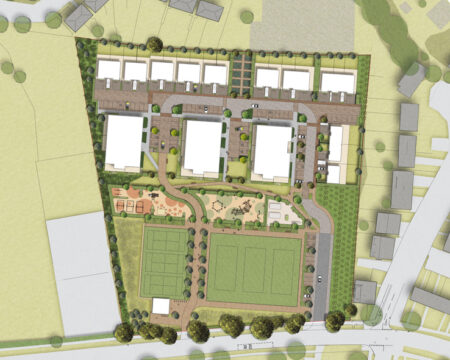
Our landscape architect team developed a comprehensive landscape design that integrates residential development with new sports and recreational facilities. A significant part of the site provides opportunities for sport, play and outdoor activity. These facilities sit between Worsley Bridge Road and the proposed residential development towards the rear of the site.
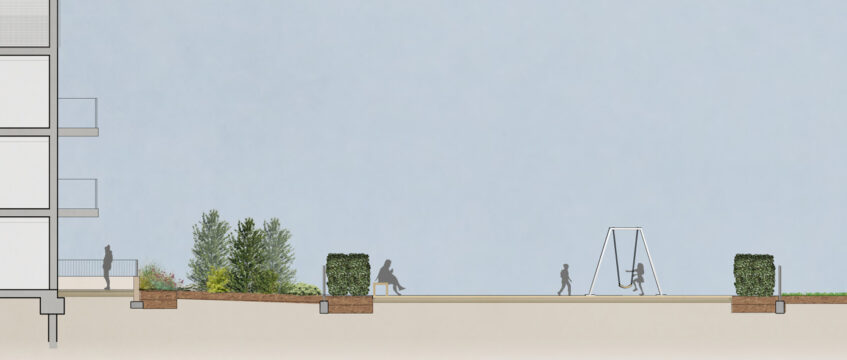
The proposals include three dedicated play areas for children of different ages. In addition, the landscape design incorporates three padel tennis courts and three tennis courts. Changing facilities will support these new recreational uses.
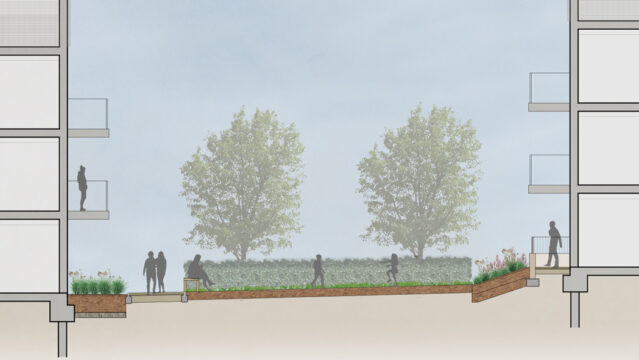
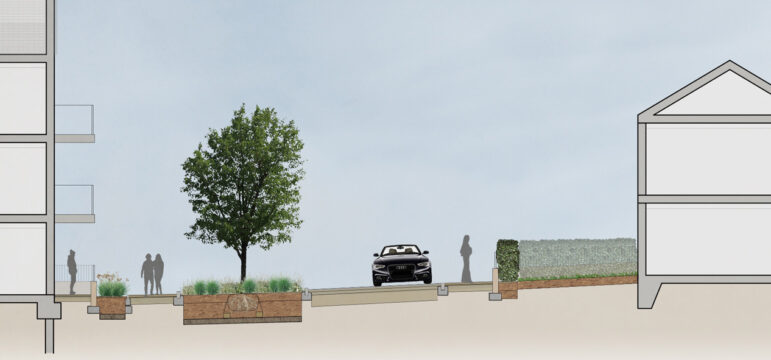
Towards the rear of the site, our landscape architect carefully planned the external spaces around the proposed homes. Paving materials and patterns clearly define footpaths, carriageways and pedestrian crossings. Furthermore, we carefully considered spaces beside ground-floor homes to improve privacy for residents.
Ecology also played a key role in our landscape architecture approach. Therefore, we selected predominantly native trees and hedging species. Most ground-cover planting will also use native species or plants included on the Royal Horticultural Society’s Plants for Pollinators list. Large areas of coppiced hazel and flower-rich grassland will further enhance biodiversity and ecological value.
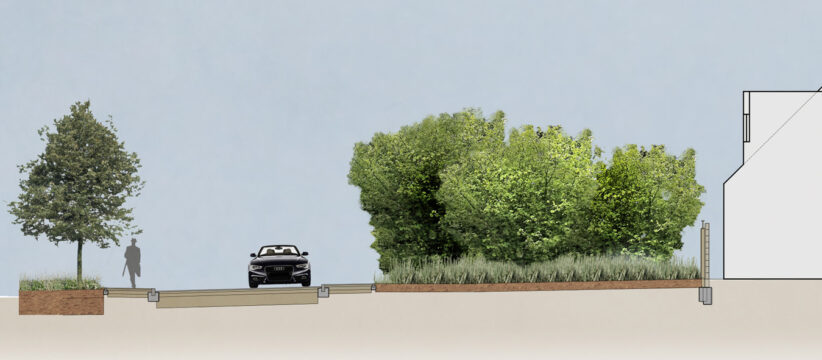
Sustainable drainage also forms an important part of the landscape design. Permeable paving and surfacing will help manage surface water. In addition, rain gardens will collect and attenuate runoff from carriageways and roofs.
Overall, the landscape architect-led design combines residential landscape, recreation, ecology and sustainable drainage. The proposals therefore create a multifunctional landscape that responds to the site’s existing character while supporting the needs of future residents and the wider community.
Landscape Institutes Work Stages: 2 to 3
Client: Caerus Developments
Architect: Caerus Developments